Council Large Item Collection in London
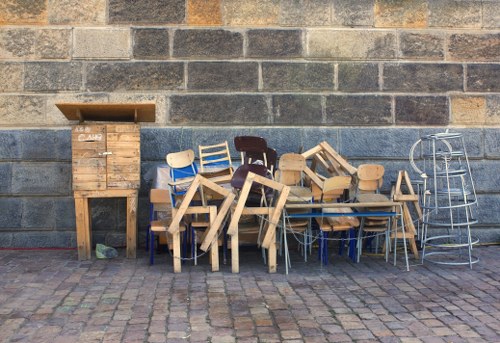
Need council large item collection in London? We arrange the removal of bulky household items that are awkward to move, heavy to carry or simply too large for the usual bin system. That can include furniture, mattresses, white goods and mixed large items, depending on what you need cleared. The service is aimed at straightforward, responsible collection for homes and flats where items need to leave the property without unnecessary disruption.
We focus on practical collection work rather than one-size-fits-all removal. If your load contains a single awkward item, a few pieces of furniture or a larger mixed collection, the aim is to match the right vehicle and the right approach to the job. Clear information about what needs taking away helps us assess the work accurately and keep the quotation relevant to the items, access and disposal route.
For a quick start, gather the basics about the items, where they are stored and any access points such as stairs, lifts or narrow hallways. That makes it easier to judge what can be removed in one visit and whether there are any handling issues to allow for. If you are ready to move forward, ask for a quotation and we will help you plan the collection.
Bulky household items and furniture removal
Large household items are often the main reason people look for this service. Sofas, wardrobes, tables, chairs, shelving units and beds can be difficult to move safely, especially when they have to pass through tight doorways or shared entrances. A careful collection process reduces the risk of scuffs, damage and awkward lifting, and it also helps separate items that can be reused or recycled from material that needs different handling.
Our furniture collection approach suits items that are still intact as well as those that are no longer usable. We can remove single pieces or grouped furniture from a room, a hallway, a loft or a storage area, provided access is workable. In many cases, the most useful part of the job is simply getting the item out cleanly without the customer needing to break it down first. If you have several items, a short list of what is staying and what is going makes the planning clearer.
Common bulky items
The most frequent collections usually include practical domestic items such as:
- sofas and armchairs
- beds, mattresses and headboards
- wardrobes, cabinets and shelving
- tables, desks and dining chairs
- white goods and other large household appliances
Mattresses, beds and bedroom clearances

Bedroom items need careful handling because they can be awkward in size without being especially rigid. Mattresses, bed frames and divans are often light enough for two people to move, but they can still be difficult in stairwells, communal corridors or smaller flats. A well planned collection keeps the process efficient and avoids dragging or folding items in ways that could cause damage to the property or to the item being carried.
Where a bedroom has more than one item to remove, it is often best to treat it as part of a small room clearance rather than a single-item call-out. That can include bedside units, broken chests of drawers and mixed soft furnishings, provided the load remains suitable for the collection. When items are separated into categories before the visit, it becomes easier to identify which pieces need specialist handling and which can be taken with the main load.
If a bed frame is still assembled, we can usually discuss the best approach based on access and the time needed to move it safely. For customers comparing options, the useful question is not just what is being taken away but where it is located and how it reaches the exit. That practical detail often makes the difference between a smooth collection and unnecessary delay.
Kitchen appliances and white goods
Large appliances bring different handling considerations from furniture. Fridges, freezers, washing machines, tumble dryers and dishwashers may contain weight, wiring, moisture or residual contents, so they need sensible preparation before collection. We handle white goods removal as a bulky item service, with the emphasis on moving items safely and disposing of them through appropriate channels rather than leaving them to sit in a hallway or service yard.
Appliances can also vary in how they are connected and where they are positioned. A machine tucked into a fitted kitchen may need more care than one standing free in a utility room or garage. If you are arranging collection for several items at once, it is useful to note whether the appliances are disconnected and whether there are steps, narrow turns or shared entrances along the route out of the property. Those details help keep the quotation realistic.
Some households want one old appliance removed before a new one is delivered, while others are dealing with a full set of outdated items. Either way, the collection should be coordinated so that the space remains usable and the removal does not create an avoidable mess. Timing, access and item condition all affect how the work is planned, especially when a bulky appliance needs careful manoeuvring.
How collections are assessed and priced

Pricing for council large item collection work is usually shaped by practical factors rather than a single flat rule. The number of items, their weight, whether they can be moved by one or two operatives, and how easy they are to reach all contribute to the quote. A straightforward ground-floor collection will generally be easier to arrange than a job involving multiple flights of stairs, tight corridors or a long carry from the property to the vehicle.
Mixed loads can also affect the way the work is calculated. For example, a single heavy wardrobe may require a different approach from a grouped collection of lighter items that together fill space in the vehicle. If there are items that need separating, such as reusable furniture alongside damaged material, that should be noted early so the collection can be priced against the correct disposal method. Accurate information avoids guesswork on both sides.
When you request a quotation, it helps to describe the items in plain language and mention anything that makes access more difficult. You do not need to write an essay; a brief note about the items, floor level and any restrictions is usually enough to begin. If you already know which items are definitely going, say so clearly. That keeps the quote focused and makes it easier to compare options.
Household clearances beyond one bulky item
Some requests involve more than a single large item and are better treated as a small domestic clearance. This can include a mix of furniture, appliances, bags, boxes or loose household items from a room, loft, garage or storage area. The advantage of grouping the work is that everything can be collected in a single visit where possible, which is often more convenient than arranging several separate removals for related items.
We handle these larger domestic loads with the same practical approach: identify what is included, consider how it is packed or stacked, and plan the route out of the property. A mixed collection may contain a few awkward pieces that need lifting first and lighter items that can be loaded afterwards. The process is easier when the customer has already decided what is staying and what is leaving, especially if the items are spread between several rooms.
For some properties, a clearance is best completed in stages. That might be because items are stored in different parts of the home, because access is limited, or because the customer wants to keep certain pieces aside for another use. In those cases, the quotation can reflect the actual scope rather than assuming a full emptying of the space. Flexible planning matters more than rushing the job.
About London
London is a large, historically layered city shaped by the River Thames and a long sequence of settlement, trade and rebuilding. Its identity is spread across distinct districts rather than a single centre, with historic cores such as the City of London sitting alongside later urban growth in places like Westminster, Southwark, Camden and Tower Hamlets. The Thames remains the city’s defining geographical feature, curving through central and eastern London and linking riverside landmarks, bridges and former docklands. The city’s landscape combines medieval street patterns, Georgian squares, Victorian terraces, post-war estates and contemporary towers, so neighbouring streets can feel strikingly different in scale and character. London’s transport network, including the Underground, Overground, bus routes and mainline rail stations, has helped shape where commercial centres, residential districts and cultural venues developed. Many areas retain strong local identities, from market streets and conservation areas to village-like pockets with independent shops, churches and pubs. Green space is also woven through the urban fabric, with major parks such as Hyde Park, Regent’s Park, Hampstead Heath, Greenwich Park and Richmond Park giving the city room to breathe. Museums, galleries, theatres and music venues add another layer, from the South Bank and Covent Garden to local cultural spaces across the boroughs. The city’s architecture tells a long story of loss, renewal and adaptation, with surviving churches, Victorian civic buildings, canalside warehouses and modern redevelopments all part of the same urban pattern. London remains both a capital city and a collection of varied neighbourhoods, each with its own history, street texture and everyday rhythm.
What to include when you request a quote

A clear request makes it easier to price the collection properly. Start with the type of item, how many pieces there are and where they are located. If you can say whether the item is on the ground floor, upstairs or in a loft, that gives a much better picture of the work than a brief headline alone. Mentioning narrow access, lift restrictions or controlled entry is also useful because it changes how the collection needs to be carried out.
It can help to separate a few details before you enquire: whether the item is intact, whether it has already been partly dismantled, and whether there are several things grouped together in one room. If you are arranging collection for an appliance, note whether it has been disconnected. If you are arranging furniture removal, say whether the item is in one piece or ready for lifting. These are the kinds of details that keep the quotation focused and practical.
One well prepared message is usually enough to begin. You do not need to oversell the job or write a long history of how the items became surplus to requirements. A short, factual description is best. Once the scope is clear, the next step is simply to confirm the collection details and decide how the work should be scheduled.
Recycling, reuse and responsible disposal
Not every bulky item has the same disposal path. Some furniture can be suitable for reuse, some material can be broken down for recycling, and some damaged or contaminated items need a different route. A responsible collection service sorts these differences rather than treating every item as identical waste. That matters because mixed loads can contain timber, metal, textiles, plastics and other materials that should not all be handled in the same way.
Where a load includes reusable furniture, the condition of the item is one of the first things to consider. A sofa with sound frames and usable upholstery may be handled differently from one that is badly worn or damaged. The same applies to appliances and bedroom items. While a customer does not need to classify everything in technical language, a simple note about condition helps guide the collection and the disposal route that follows.
If you are thinking about what to keep and what to remove, it is often worth separating items into distinct groups before the collection takes place. That can reduce confusion on the day and makes it easier to load in an orderly way. Responsible disposal begins with a clear understanding of the load, and that benefits both the customer and the final handling of the items.
Access, lifting and moving bulky items safely
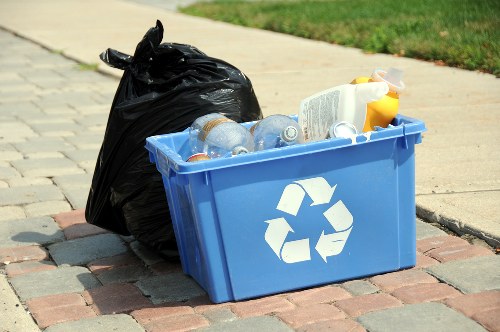
Bulky item work is not only about disposal; it is also about managing the physical move safely. Heavy items can damage walls, floors and doors if they are forced through tight spaces without a clear plan. Careful lifting and carrying reduces that risk and helps protect the property. It also makes the job less stressful for anyone who would otherwise try to move a large item alone or with too few people.
Access is a major part of the assessment. Stairs, corners, low ceilings, parking restrictions and long internal carries all make a collection more involved. A straightforward item on a clear route may be simple, while the same item in a tight upper-floor room could require more time and care. That is why accurate descriptions matter; they allow the collection to be planned around the actual environment rather than assumptions.
If you want to proceed, send the item details and the property access notes in one clear request. Then you can review the quote, decide what you want removed and arrange the collection on that basis. Request a quotation when you are ready to move ahead.
Areas and property types we can work with
Large item collection is often needed in different kinds of homes, from compact flats to larger houses and mixed-use properties. A flat may require attention to lifts, shared entrances and corridor space, while a house may present loft stairs, side access or garden routes. The service needs to adapt to the building rather than expecting the building to adapt to the collection, which is why the access details are so useful when a quotation is prepared.
We also handle loads that come from specific parts of a property rather than the whole home. That might be a garage full of old furniture, a loft containing spare mattresses and boxes, or a spare room where unwanted items have accumulated over time. When the collection is focused on one area, it can often be planned more efficiently, provided the description is clear and the route out is manageable. If there are several storeys or a difficult parking arrangement, that should be mentioned early.
For customers comparing options, the most helpful approach is to think in terms of the item, the space it is in and the route out. Those three things usually tell us enough to produce a sensible quotation. A concise enquiry is often better than a long message because it keeps the essential facts easy to check and respond to.
Book your council large item collection
When bulky items start taking up useful space, the simplest next step is to arrange a collection that fits the load and the property. Whether you need one large item removed or several pieces taken together, the service is built around practical handling, clear pricing factors and responsible disposal. The aim is to make the process straightforward from the first enquiry through to the collection itself.
If you have already decided what needs to go, you are in a good position to request a quote. A short description of the items, location and access is usually enough to begin. From there, the collection can be planned around the actual work rather than a generic estimate, which is often the most useful way to proceed for busy households and flats.
Ready to get started? Send your details, review the quotation and choose the collection time that suits you. If you need a final prompt, simply ask for a quotation today.